
How to train your trees to survive the drought
Trees are like people, they will adjust their behavior to whatever their environment is giving them. If a tree is getting water everyday, it will grow its roots shallowly and it will expand its water conducting vessels to maximize an ample supply of water. It will also put on large solar arrays of leaves because it is in no way short on water.
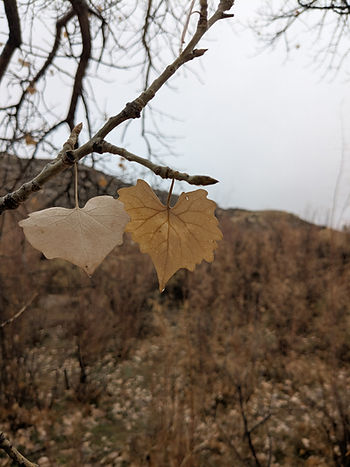
If the water suddenly gets turned off, that same tree is susceptible to serious tissue damage in several ways. The first thing it will do is close down stomata, the microscopic, mouth-like pores, primarily found on the epidermis of leaves and stems. Then as the leaves burn from over heating and UV stress it will begin to shed leaves, starting with the older leaves first. Then vessels will begin to collapse and die. Stem death will lead to branch death, which can endanger the tree due to susceptibility to pest and disease infestation.
This may all sound terrible, but it is how trees adapt to different weather conditions. Leaves and branches are expendable, as well as small diameter roots. But it's important limit the amount of damage done to the tree, especially the conductive tissue, not only to promote growth, but also to keep the tree's natural defenses strong.
Therefore, it may seem counter intuitive, but we do not want to be front loading a drought year by watering more than usual in the spring. Instead we train our trees to use their natural adaptations to help them stay strong during a drought year.
So how can we try to curb the impacts of drought on a year like this one? Here are a few strategies and why. (Start these early in the season to begin training your trees now!)
Water deeper! We need to train our trees to grow deeper roots. Deeper roots are less vulnerable to drought because they can find supplemental moisture lower in the soil. And the water you do put down lasts longer in the soil profile.
Water less frequently. Not only because you are putting down more water to get to deeper roots but also because we do not want to encourage our trees to expand their vessels more than is appropriate in a drought year. (Big caveat! If you have newly planted trees such as in the past 2 years, you will not be able to water infrequently since their infantile root system is too small to have roots deeper in the soil profile. For these trees, stick to regular waterings and lots of woodchip mulch.)

Woodchip mulch. The data consistently comes back that woodchip mulch under your trees is the best thing, besides watering, you can do for your trees. I encourage 3 to 4 inches (or even more so long as you are making sure your watering is getting past the wood chip layer) out to the drip line on new trees, or out a few feet on older trees. And if you have very large trees that are established in a lawn setting woodchips may not be appropriate. Woodchips will keep your soils moister for longer. They also do other amazing things including: they feed your soils as the woodchips break down, they encourage microbial activity including the famed mycorrhizal fungi that are beneficial to trees, they also promote other arthropods like millipedes and worms that actively de-compact your soils. Can’t say enough about woodchips!
Protect your trees. Any unnecessary damage to the tree’s stem or roots will exacerbate the issue. Protect the roots as much as possible from compactions and excavation.


Comments